Week 2: Reflection Post
This week’s class focused on something most of us interact with constantly but rarely stop to think about: the amount of data we leave behind every time we open a browser, use an app, or click through a website.
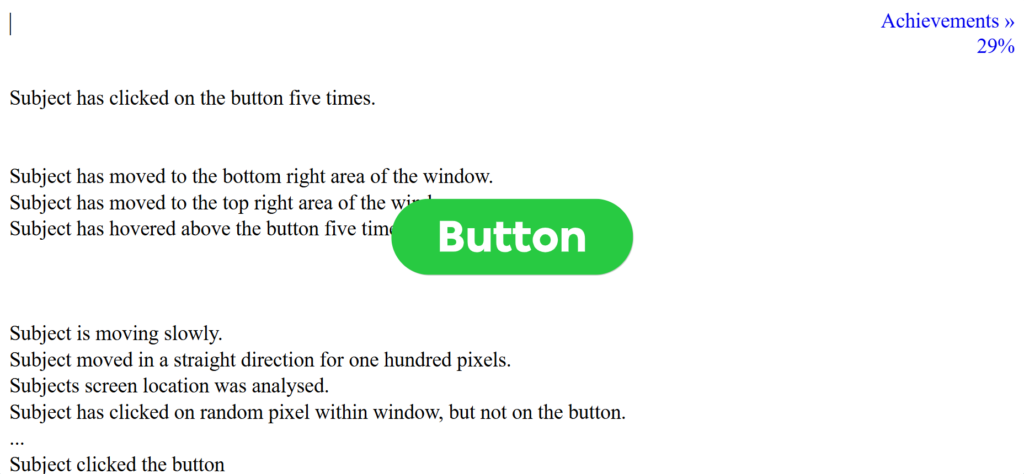
We explored four websites and tools designed to make digital tracking visible. The first, clickclickclick.click., narrates your behaviour in real time: mouse movement, scrolling patterns, idle time, even when you switch tabs. On paper, that information sounds relatively harmless. Watching a website describe exactly what you’re doing as you do it, however, is unsettling.
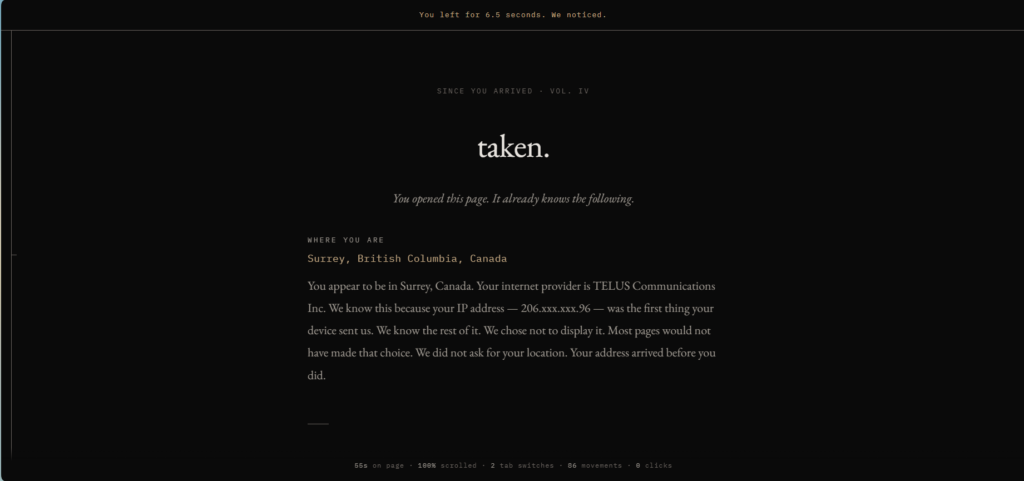
The second tool, Since You Arrived, felt less like a demonstration and more like a confrontation. It immediately surfaced my approximate location, IP address, time zone, browser information, and the page I arrived from. One line on the page stayed with me: “Every page you have ever visited knows at least this much. Most of them know more. None of them told you.” Seeing that information laid out plainly made digital surveillance feel much less abstract.
Privacy.net took a similar approach, displaying information such as IP address, location, and even battery status. None of this data is especially shocking on its own, but seeing how quickly it can be collected and displayed raises important questions about how much websites know about us by default
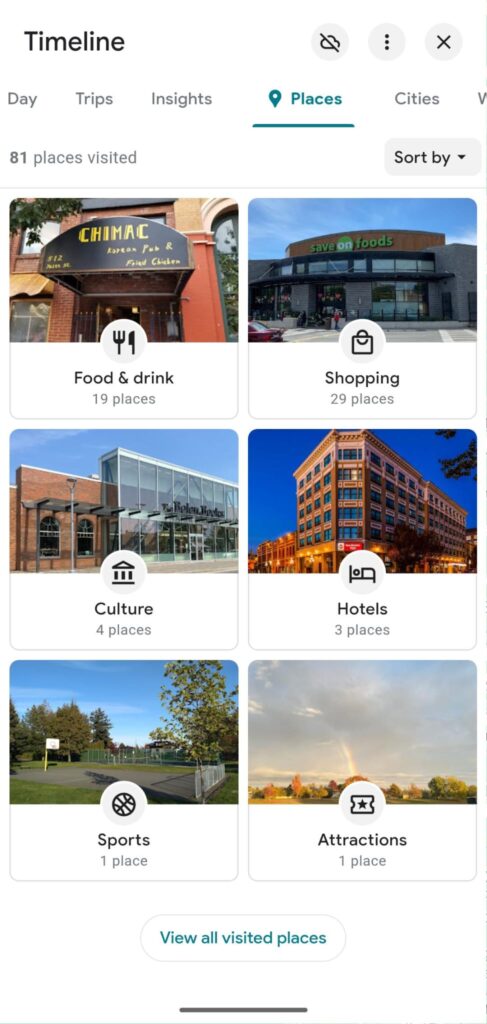
Finally, we explored location history through Google Maps. I’ve used Google Maps for years for navigation, but I did not realize it creates a timeline of the places I’ve visited. When I opened my timeline, I found categorized location history, all neatly organized without me ever consciously tracking them myself.
From an educational standpoint, this connects directly to the ethical and legal frameworks we need to understand as future educators. Privacy legislation like PIPEDA in Canada governs how personal information can be collected and used. Most people have no working awareness of what that means day to day. These websites make abstract policy tangible in a way that a lecture simply can’t.
There’s also a meaningful distinction worth sitting with: knowing that data is collected versus seeing it laid out in front of you are two very different experiences. The emotional response that comes from the latter is actually a powerful pedagogical tool. It’s the kind of learning that shifts behaviour, not just knowledge.
That said, it’s worth thinking critically about these tools too. Sites like Since You Arrived and clickclickclick are designed to provoke, but they don’t fully explain how this data is used. They raise awareness without necessarily building the informed digital literacy needed to act on it. As educators, there’s an important difference between sparking concern and building capacity.
For me personally, this week prompted some immediate changes: reviewing browser privacy settings, looking more carefully at app permissions, and thinking twice before clicking “accept” on a terms of service I’ve never actually read.
But the bigger question is what this means for the classroom. If we’re designing learning experiences in digital environments, the students are generating data every time they log in. What platforms are collecting it? Who has access? Are the tools we use in education held to the same standards we’d want applied to our own information?
These aren’t questions with easy answers, but they belong in any conversation about online and open education. Digital literacy isn’t just about knowing how to use tools, rather it is about understanding what those tools are doing behind the scenes, and feeling equipped to make informed choices about them. This week made that feel a lot more urgent.